

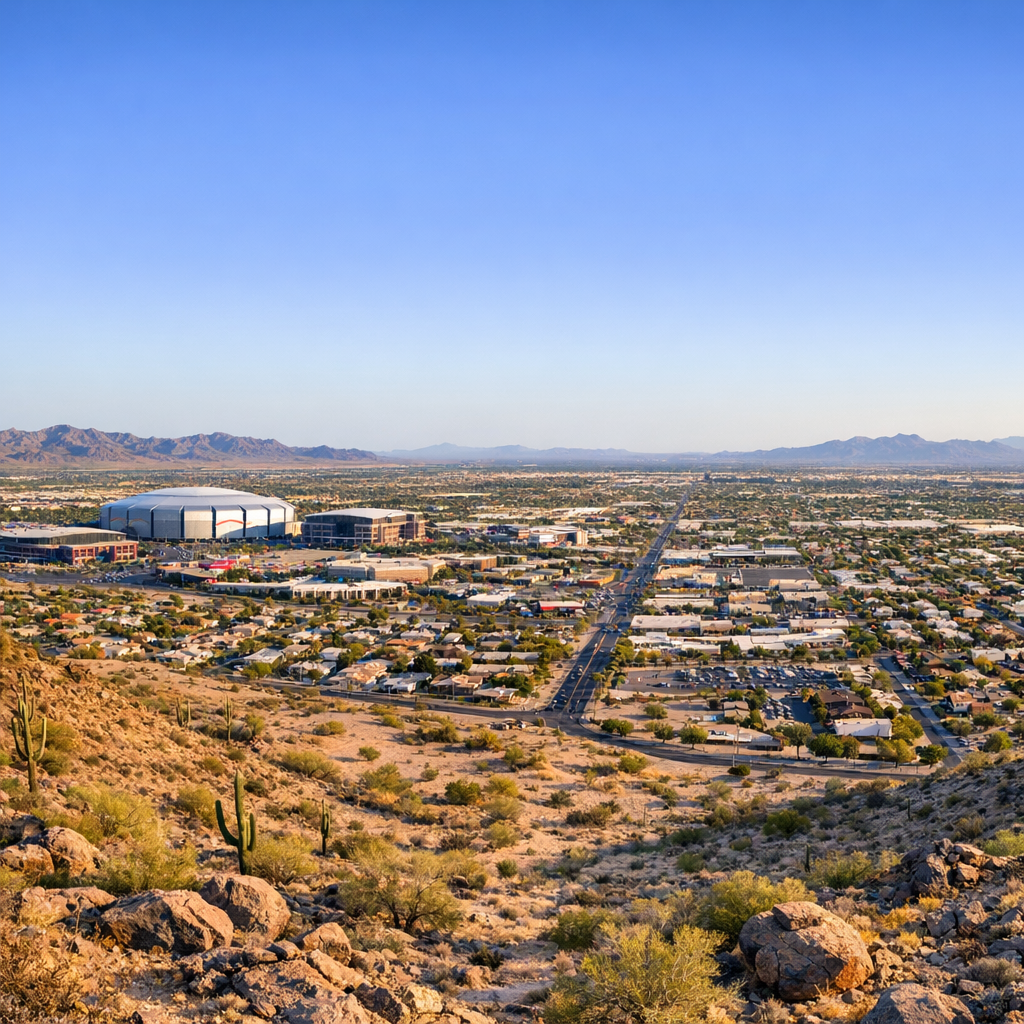
Glendale, Arizona, experiences a hot desert climate characterized by scorching summers and mild winters. Average high temperatures range from 67°F (19.4°C) in January to 106°F (41.1°C) in July, with annual precipitation averaging around 9.34 inches (237 mm).
Air Quality Concerns
Recent reports highlight significant air quality issues in the region. The American Lung Association’s 2026 “State of the Air” report indicates that nearly 1.4 million children in Arizona are at risk from ozone pollution, with the Valley among the worst U.S. metro areas for air quality.
Water Resources and Drought Preparedness
Glendale’s water supply primarily comes from the Salt, Verde, and Colorado rivers, supplemented by groundwater. The city has been in a prolonged drought for over two decades, impacting the Colorado River system. In response, Glendale has implemented a Drought Preparedness Plan to ensure a sustainable water supply for its residents.
Stormwater Management
As a Phase I Municipal Separate Storm Sewer System (MS4), Glendale’s stormwater is discharged untreated into local waterways. The city maintains a Stormwater Management Program aimed at reducing pollutant discharges and protecting water quality. Residents are encouraged to prevent stormwater pollution by properly disposing of waste and minimizing the use of harmful chemicals.
Community Involvement
Residents can contribute to environmental sustainability by participating in local conservation programs, adhering to water usage guidelines, and staying informed about air quality alerts. Community engagement is vital in addressing Glendale’s environmental challenges and ensuring a healthy future for all.