

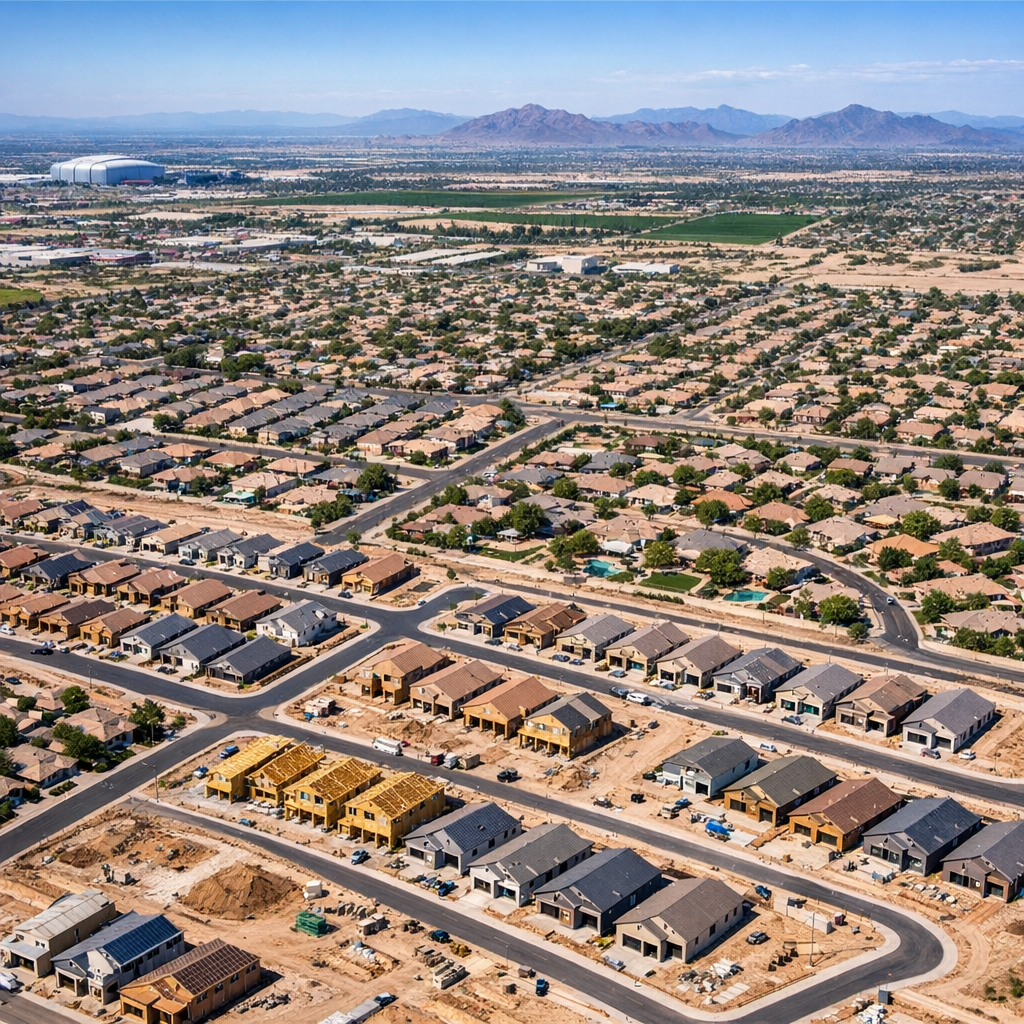
Glendale’s housing market is experiencing notable shifts, presenting both challenges and opportunities for residents and investors.
Current Market Trends
As of May 2026, the average home value in Glendale stands at $408,515, reflecting a 2% decrease over the past year. Homes typically go pending in around 24 days, indicating a relatively brisk market pace. The median sale price is $407,483, with a median list price of $446,333. Notably, 22.3% of sales have been closing above the list price, while 52.5% have been below, suggesting a balanced negotiation environment.
Rental Market Insights
The rental sector shows stability, with the average rent at $1,542 as of May 2026. This figure is below the national average of $1,951, offering more affordable options for renters in Glendale. The year-over-year change is a slight decrease of 0.5%, indicating a steady rental market.
New Developments and Economic Growth
Glendale is witnessing significant developments that could influence the housing landscape. In January 2025, Nestlé inaugurated a $675 million coffee creamer manufacturing facility in the city, expected to create approximately 300 jobs. This economic boost may increase housing demand in the area.
Additionally, two affordable housing projects are underway at the northwest corner of 67th and Maryland avenues. Juniper Square, aimed at older adults, is projected to open in spring 2025, with 67 Flats following a year later. These developments incorporate sustainable features like solar panels and low-flow appliances, addressing both housing needs and environmental concerns.
Market Dynamics
Institutional investors have reduced their activity in Arizona’s housing market. In the first quarter of 2025, they purchased 6.9% of homes sold in the state, an 11% decrease from the previous year. This trend may alleviate competition for individual buyers in Glendale.
Furthermore, Phoenix led the U.S. in home delistings in May 2025, with nearly 30 homes delisted for every 100 listed. This indicates a shift toward a more balanced market, providing buyers with increased negotiating power.
Conclusion
Glendale’s housing market is evolving, influenced by economic developments, new housing projects, and changing investor behaviors. Staying informed about these trends is crucial for making strategic decisions in this dynamic environment.