

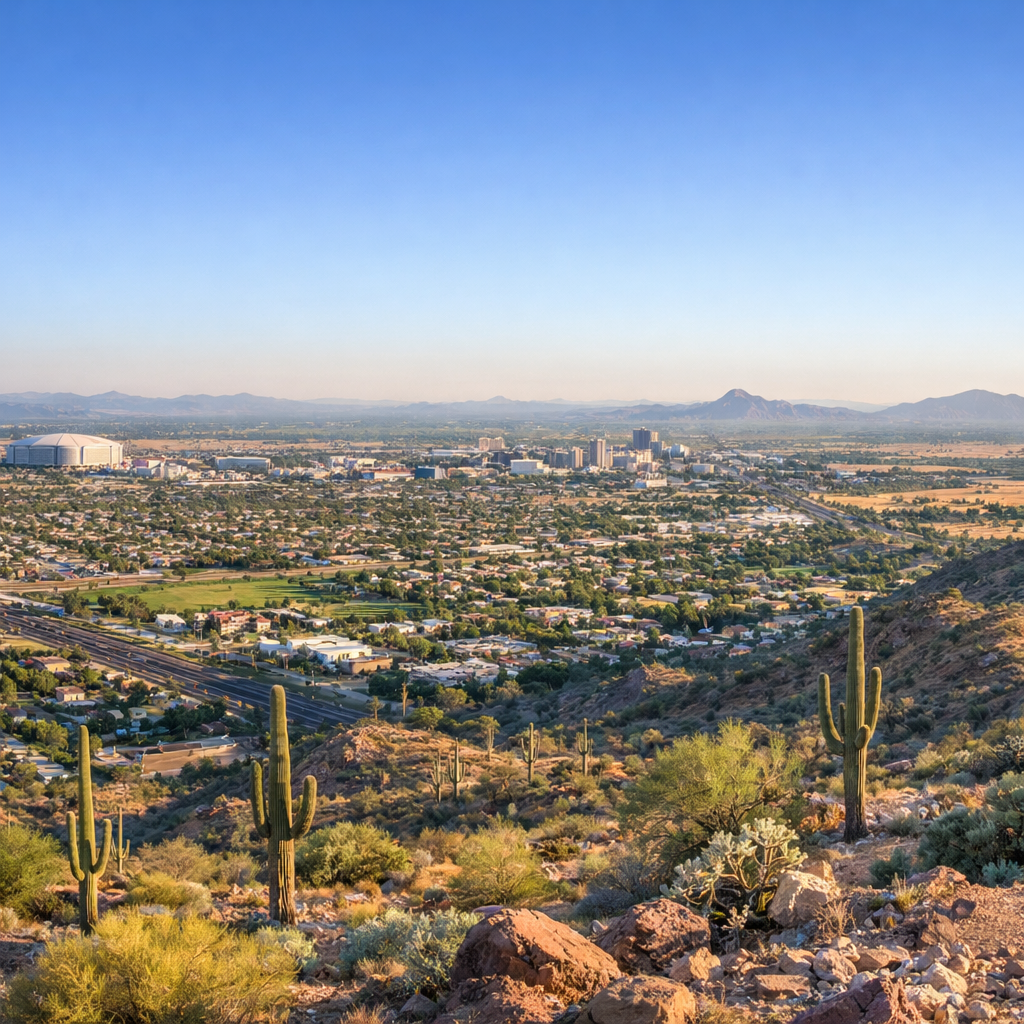
Glendale, Arizona, experiences a hot desert climate characterized by scorching summers and mild winters. Understanding these patterns is essential for residents to adapt and thrive in this environment.
Climate Overview
Glendale’s climate features:
- Hot Summers: Average high temperatures exceed 98°F (37°C) from late May to mid-September, with July being the hottest month, averaging highs around 106°F (41°C).
- Mild Winters: From late November to late February, average high temperatures remain below 73°F (23°C), providing a comfortable respite from the summer heat.
- Low Precipitation: The city receives an average annual rainfall of approximately 9.34 inches (237 mm), with the majority occurring during the monsoon season from July to September.
These conditions necessitate water conservation and heat preparedness strategies for residents.
Environmental Concerns
Air Quality
Glendale, part of the Phoenix metropolitan area, faces challenges with air quality, particularly concerning ozone pollution. A recent report highlighted that nearly 1.4 million children in Arizona are at risk from ozone pollution, with the Valley ranking among the worst U.S. metro areas for air quality. Ozone forms when volatile organic compounds combine with nitrogen oxides, primarily from fossil fuel emissions. Despite regulatory efforts, the region has struggled to meet federal ozone standards for about a decade. Residents are encouraged to stay informed about air quality indices and limit outdoor activities during high pollution periods.
Water Resources
Water scarcity is a pressing issue in Glendale. The city relies on renewable water supplies from the Salt, Verde, and Colorado rivers, supplemented by stored water credits and limited groundwater pumping. The ongoing drought in the Southwestern United States has significantly impacted the Colorado River system, leading to a Tier 1 shortage declaration. Glendale has been proactive in preparing for such shortages, implementing long-term planning and water conservation measures to ensure a sustainable water supply for its residents.
Stormwater Management
As a Phase I Municipal Separate Storm Sewer System (MS4), Glendale’s stormwater system is separate from the sanitary sewer system. Stormwater that doesn’t soak into the ground or evaporate is discharged into local waterways without treatment. To reduce pollutant discharges, the city maintains a Stormwater Management Program, which includes public education, monitoring, and enforcement measures. Residents can contribute by preventing pollutants from entering storm drains and reporting illegal discharges.
Community Initiatives
Glendale’s Environmental Resources Group provides policy advice and programs addressing air quality, drinking water quality, stormwater, and water conservation. The city encourages residents to participate in conservation efforts, such as reducing water usage, properly disposing of waste, and staying informed about environmental issues. By working together, the community can address these challenges and promote a healthier environment for all.